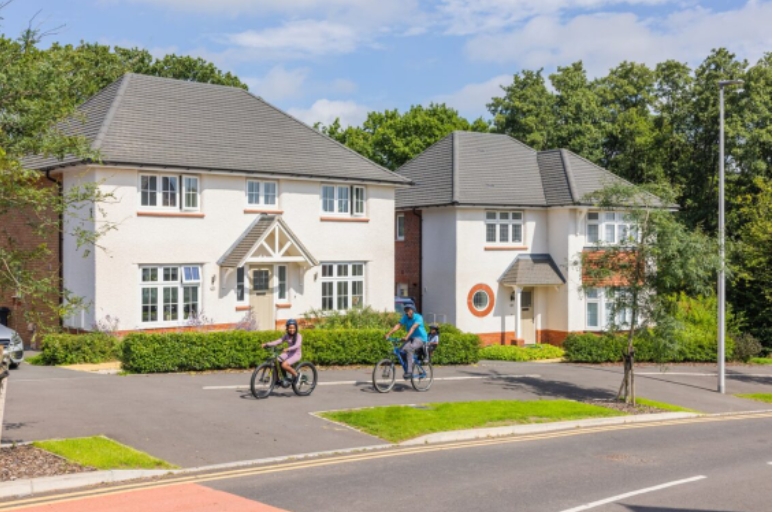
Perched on top of a hill near the Wedzin Kwa river in Smithers, B.C., is the town’s first multi-unit passive house building. The Harding Heights affordable housing complex is an example of B.C.’s commitment to encouraging net-zero new buildings and other energy-efficiency initiatives.

That commitment earned the province top spot on the Canadian Provincial Energy Efficiency Scorecard for the second year in a row.
Passive house buildings, which are certified by the Passive House Institute, must meet a series of strict requirements to minimize energy consumption. They may have heat pumps, triple-glazed windows and insulation that nearly eliminates heat loss.
“It’s definitely the most energy-efficient building in town,” said Judy Hofsink, building manager of Harding Heights, which opened in 2018.
Hofsink said Harding Heights is so efficient at trapping solar heat, some tenants need to open their windows even though there’s snow on the ground. “It might be a little bit too warm because of the passive energy, but it is a really great building,” Hofsink said.
The scorecard, compiled by Efficiency Canada, rates the provinces on their energy-efficiency policies, programs and plans. Quebec came in second followed by Nova Scotia, while Saskatchewan came in last. The territories weren’t rated due to a lack of publicly available data. Despite B.C.’s successes, it only earned 58 out of a possible 100 points.
The evaluation was done on a provincial level because each jurisdiction has control over energy-efficiency policy areas such as public utility regulation and building energy codes.
“With climate change, energy efficiency is a huge part of the solution that is often neglected by policy leaders,” said Brendan Haley, policy director at Efficiency Canada and co-author of the scorecard, which was released on Nov. 17.
“It’s not as flashy as batteries and solar panels and that’s really why we do this — we’re trying to put energy efficiency on the map as a really important policy solution. It’s one that everyone can participate in, in every single province.”
B.C.’s building ‘step code’ an example to the country
The building sector is responsible for more than a quarter of Canada’s energy demand, according to the International Energy Agency. By constructing energy-efficient buildings and retrofitting existing buildings, the country can eliminate up to 28 per cent of its total energy needs, the agency says. But to do so, experts say the provinces need to modernize building codes, which are standards builders must meet when constructing new buildings or renovating existing ones.
In 2017, B.C. introduced the voluntary BC Energy Step Code to encourage builders and local governments to adopt energy-efficient construction techniques.
The step code provides five tiers builders can choose to meet. At level one, the building is slightly more efficient than the mandatory building code and at level four it is 40 per cent more efficient. Level five, which will be mandatory in 2032, is net-zero energy ready. In other words, builders don’t have to install the solar panels, but they have to design for their future installation.
“Traditionally, building code is just a minimum standard — the worst house you can legally build,” Haley said. “The step code created a series of steps, or performance tiers, signaling where the market needs to go.”
Tom-Pierre Frappé-Sénéclauze, director for buildings and urban solutions at the Pembina Institute, called the step code “an elegant solution to a log jam that all building codes have.”
He explained that the step code is designed in a way that creates space for builders to reach energy-efficiency targets by whatever innovative methods they choose. Instead of a code that “tells you the inches of insulation and how long the screws need to be,” the step code says, “how you get there, we don’t really care, we just want to make sure that you reduce energy [consumption].”
Haley said B.C.’s step code is an example to the rest of the country. “We’re really hoping that we see all the other provinces adopting a kind of a B.C.-style building code in future years.”
Frappé-Sénéclauze cautioned that the code, while encouraging, still permits buildings to have a carbon footprint. “The step code allows you to build new buildings that are connected to [natural] gas,” he explained.
He would like to see the code include a target for eliminating all greenhouse gas emissions. “Lesson number one, we’re in a climate emergency. We’re in a hole — stop digging.”
B.C. could adopt property assessed clean energy financing like other provinces
B.C.’s leadership on new construction will pave the way for reducing future provincial energy consumption, but the province has room for improvement in renovations and retrofits, according to the scorecard.
Haley said the province can join other provinces — such as Alberta, Saskatchewan, Ontario and Nova Scotia — in supporting retrofitting financing. Property assessed clean energy financing allows the cost of an energy-efficiency renovation to be paid back over time through an increase in property taxes. According to a recent Pembina Institute report, provincial legislation is required to give local governments the authority to incorporate the energy-efficiency financing.
“The whole idea there is that you can enable municipalities to use the property tax system to pay off building upgrades,” Haley said. “The benefit of doing that is that it’s really the building that is getting the benefit of those upgrades, regardless of who lives in it.”
He gave the example of a homeowner who might be reluctant to upgrade a house in case they move. “You can tie that payment to the building itself, and then whoever happens to be using that building will pay it off over time, which will allow those energy upgrades to be financed over a much longer time period, perhaps even 20 or 30 years.”
Haley added that the system enables “radical energy-efficiency measures [that] achieve the types of savings that we really need for climate change.”
Frappé-Sénéclauze said implementing property assessed clean energy financing would be a positive step forward, but it needs to be paired with strict regulations to ensure buildings — especially large commercial and industrial buildings — reduce their energy footprints.
“There’s no way that we’re going to see the kind of retrofits that we need to reduce our carbon pollution and protect our assets spontaneously just because we’ve made lending available to people.”
B.C. leads Canada in electric vehicle registrations
B.C.’s commitment to electric vehicles also earned it top points on the scorecard. The province leads the country in new electric vehicle registrations, thanks in part to its progressive electric vehicle rebate program, investments in charging infrastructure and recent legislation that requires all new vehicles sold by 2040 to be electric.
On Thursday, the province announced it had doubled the rebate for home and workplace charging stations.
“B.C. has the strongest uptake in electric vehicle adoption across Canada, and we’re positioning ourselves to become leaders in the EV industry,” Minister of Energy, Mines and Low Carbon Innovation Bruce Ralston said in a statement. “We’re making it easier and more affordable for people to make the switch to electric vehicles and supporting new jobs for electricians and trades workers across B.C.”
The province has also partnered with its two main energy providers, BC Hydro and FortisBC, on programs aimed at ensuring those vehicles have the required charging infrastructure. According to the scorecard, provincial programs have supported the installation of more than 1,300 public and residential charging stations to date.
Haley also pointed to Vancouver’s recent Climate Action Emergency Plan, which was approved the same day the scorecard came out, as an example of commitment to energy-efficient transportation in B.C.
The plan says the city will make it easier for residents to walk, bike or take public transit by encouraging neighbourhoods to be more self-sufficient and designing travel pathways that focus on these methods of transport. The city will also charge people to drive into the downtown core. According to the city, the same model in London, England, reduced vehicle traffic by 40 per cent and increased the amount of people coming into the city centre by nearly 25 per cent.
Site C dam cost B.C. points on scorecard
B.C.’s investment in the Site C dam — which has experienced delays and cost overruns — lost the province some points on the scorecard, which suggests B.C. should prioritize energy reduction over building new infrastructure.
Haley would like to see all provinces take this energy-savings approach before considering new energy-supply infrastructure, whether that’s a new dam or a natural gas pipeline. He pointed out that some U.S. states have even legislated this requirement.
“Unfortunately, that was not done in B.C. to build the Site C hydroelectric dam and it was also not done in Newfoundland and Labrador to build the Muskrat Falls hydroelectric dam.”
But, he added, there is hope.
The Utilities Commission Act now requires BC Hydro to submit a plan explaining why it is unable to meet energy demands through energy-efficiency programs before it can develop any new infrastructure.
Systemic racism may contribute to lack of energy-efficiency programs for Indigenous communities
Haley noted that provincial spending on Indigenous energy-efficiency programs was surprisingly low given the province’s commitment to the United Nations Declaration on the Rights of Indigenous People.
The report includes a clear statement on the divide between settler and Indigenous communities: “Indigenous populations could not be receiving adequate and equal energy-efficiency services due to systemic racism and program approaches that do not consider specific community needs or the importance of negotiation and partnership with independent Indigenous nations.”
The scorecard does acknowledge provincial programs like BC Hydro’s Indigenous Communities Conservation Program, which provides communities with training on energy-efficiency technologies, rebates on upgrades and free products like weather stripping and energy-efficient lightbulbs.
But Haley said energy-efficiency initiatives should be more inclusive and could play a role in what he said should be the national agenda: “reconciliation and fighting colonialism.”
The BC Indigenous Clean Energy Initiative helps administer provincial and federal funds to Indigenous communities for energy-efficiency projects. But Cole Sayers, a member of the Hupacasath First Nation and director of the initiative, said communities face several barriers in accessing those funds.
He said to receive funds, communities usually have to prepare a planning document, but many Indigenous communities face extreme poverty and are unable to finance the work required to prepare those documents.
He also said there’s a lack of adequate funding to ensure communities receive the training necessary to maintain energy-efficiency technologies such as heat pumps and solar panels. “In our projects, we stress that there has to be that capacity training,” Sayers said.
Another important factor is educating community members about energy usage and how not to be wasteful, he said. “A really important part of the conversation that often gets left out is altering behaviour. And that’s not just First Nations — it’s everyone.”
This article is reproduced at thenarwhal.ca