There is more than one way to achieve the Paris Agreement targets, and more than one way to achieve a low carbon future. Although it is projected that renewables and other unconventional sources of energy may gain a significant portion of the energy supply mix in the next 30 years, based on the GECF Global Gas Model’s (GGM) calculation, at the GECF we believe that some concerns may restrict the worldwide commitment to fully substituting fossil fuels, and in particular natural gas. The GGM shows that being committed to carbon-neutral targets does not sufficiently contribute to the greenhouse gas (GHG) emissions reduction, if not accompanied by feasible policies.
Years ago, the need to discuss climate change would not be a given as it is today. Since global warming has become a major hazard for the future of the planet, energy transmission as a response to this concern is inevitable. To limit warming to 1.5°C by 2050-60, many countries agreed and pledged under the Paris Agreement to set up ambitious targets to reach net-zero emissions across their regions. According to Climate Action Tracker, 127 countries that produce around 63% of global emissions are now committing themselves to adopt net-zero targets. Several explanations follow to elaborate on this point:
First, the global energy demand may outweigh the energy supply from unconventional sources due to increasing consumption in energy-intensive sectors, such as power, transportation, and industry. As a long-lived established industry, up to now oil and gas have played a key role in the energy supply mix and it is estimated to remain dominant, at least, in the next 15 to 20 years. While this industry has been subject to massive investment and development, emerging renewables may warrant more time and investment to follow in their predecessor industry’s footsteps. Despite the advancement in renewables, to fill the supply gap, countries will ensure their energy security due to unpredictable dynamics of the energy sector by preserving their supplies from conventional sources, among which natural gas is the cleanest and the cheapest.
Second, since the global population is rising specifically in urban areas, many developing regions may not be able to afford higher prices of energy generated from renewables, unless the industry will generate economies of scale. To this end, renewables require large investments – according to the International Energy Agency, annual clean energy investment worldwide will need to be around US$4 trillion by 2030 to reach net-zero emissions by 2050 in order to overcome the mismatch that exists between energy demand and the availability of energy from various renewable sources.
Third, research and development in the oil and gas industry have been growing substantially to promote innovation in developing new technologies for generating cleaner energy. Increasing efficiency is one of the main outcomes of such innovative advancement in the industry that has been accelerating in recent years. In other words, energy transition not only considers renewables development, but also implies a process of optimising the behaviour of energy systems without necessarily adhering to the complete removal of fossil fuels. And among fossil fuels, natural gas plays a key role in the development of efficiency.
The GECF Secretariat strives to favour this opportunity within the framework of the Environmental Knowledge and Solutions (EKS) initiative that has been established as a way to support the Paris Agreement process and the attainment of UN Sustainable Development Goals. The GECF Member Countries are in the forefront of such developments through efficiency-enhancing processes that pave the way for energy transition and carbon reduction in various ways, including but not limited to:
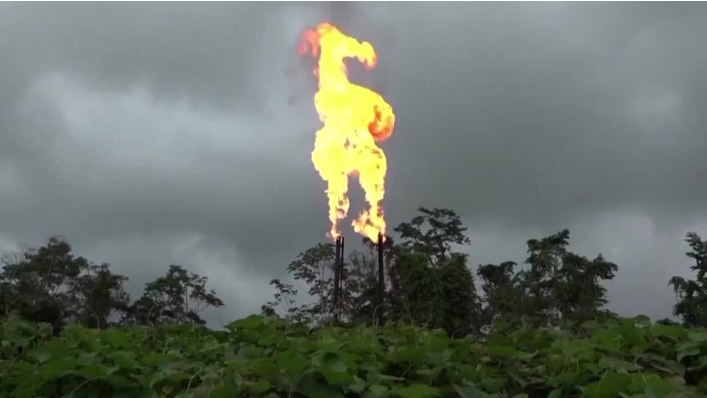
Ø Reducing methane emissions from flaring and waste gases
Ø Investing in renewable energy
Ø Deploying carbon capture and storage (CCS)
Ø Investing in blue hydrogen
Ø Removing fossil fuel subsidies and increasing energy efficiency
Emissions reduction is a top priority for the industry and the GECF Secretariat is supporting its members in these efforts. Some specific examples of how the GECF Member Countries have been recently active in this area:
· Egypt has launched an energy diversification strategy, known as the 2035 Integrated Sustainable Energy Strategy, which aims to step up the development of renewable energy and energy efficiency in the country. Egypt aims to produce 20% of its electricity using renewable sources by 2022 and 42% by 2035 [3]. Furthermore, Egypt has committed to reducing energy subsidies and adjust the prices to international levels [4].
· In order to achieve a desirable level of environmental protection and sustainable development, Iran has invested more than US$5 billion into environmental projects in the oil and gas sectors. The Iranian Ministry of Petroleum has been implementing various programmes, one of which is to promote the establishment of flare gas recovery units in the country’s oil-rich regions. These projects aim to prevent the loss of natural gas, protect the environment, and provide environmentally friendly feedstock for petrochemical plants in the country [5]. Moreover, the Associated Gas Gathering Plan (AMAK) is the largest domestic environmental project in the oil and gas sector, which collects associated petroleum gas (APG) from oilfields and after dehydration, injects it into the pipeline for further consumption.
· In Iraq, currently, most of its gas output is associated with gas produced at oil fields and the majority of this is flared. According to an April 2021 report by the World Bank, Iraq had the world's second-largest gas flaring volume last year after Russia, burning around 17.3
billion cubic metres (bcm) of gas in 2020 [6]. However, the country plans to end gas flaring by 2025 [7]. In this regard, Sinopec and TotalEnergies intend to work on developing four associated gas and solar power projects in Iraq to collect and refine associated gas produced from the Ratawi, West Qurna 2, Majnoun, Tuba, and Lahis oil fields [8, 9].
· In Norway, Equinor has already brought CO? emissions in the oil and gas production down to industry-leading levels. The company is implementing several emission reductions measures, which takes into account scope 1 and 2 GHG emissions (operated basis 100%) and scope 3 GHG emissions (use of products, equity share). The company has the ambition of reducing the GHG emissions from its operated offshore fields and onshore plants by 40% by 2030, 70% by 2040 and to near zero by 2050 [10]. Equinor considers CCS as vital to meet its net-zero target. The company has extensive experience with CCS operations and is a part of more than 40 research projects on CCS [11].
· In April 2021, Qatar joined in creating a Net-Zero Producers Forum as part of the countries’ climate commitments. This forum is said to be dedicated to developing long-term strategies to reach global net-zero emissions. In this context, as part of a new sustainable development strategy, Qatar Petroleum (QP) is targeting to reduce 25% emissions from its LNG plants by 2030. Furthermore, emissions from its upstream operations will be reduced by at least 15%, and flaring intensity will be reduced by 75%, from the 2013 level. The company is also committed to limiting methane emissions in its gas value-chain by setting a methane intensity target of 0.2% by 2025. QP also aims to add more than 4 GW of renewable energy in Qatar, which should reduce CO2 emissions by 5 million mt/year. Last but not the least, QP is aiming to capture and store some 7 million mt/yr of CO2 from its LNG facilities by 2027. The company has already included environmental considerations in some of its supply contracts [12, 13, 14].
· In Russia, NOVATEK has embraced a long-term methane emissions reduction target by 2030, mainly to diminish methane emissions per unit of production by 4% in the production, processing and LNG segments. Furthermore, the company has plans to reduce GHG emissions per unit of production in the upstream segment by 6%, as well as by 5% per ton of LNG production [15]. Russia is also targeting 20-25% of future global hydrogen trade. The country has projected that it could export up to one million mt/yr of hydrogen in 2024, rising to 7mn mt/yr in 2035 and between 7.9 and 33.4 million mt/yr by 2050 [16].
To conclude, global challenges require a global determination that goes beyond mere promises. Taking sustained, practical, even sluggish, steps is crucial to battle global warming. Many countries in the OECD have already started moving toward a sustainable economy through the energy transition. Above mentioned examples indicate that the GECF Member Countries have been mindful and responsive to the need for the energy transition. However, this is just the beginning and they can leverage the great opportunities that energy transition provides to develop their economy in general, and energy mix in particular.