Almost all clean energy transition scenarios give hydrogen a key role in our future. With geopolitical impacts on gas prices accelerating the economic case for hydrogen produced from nuclear power, the sheer scale of the opportunity for nuclear is breathtaking
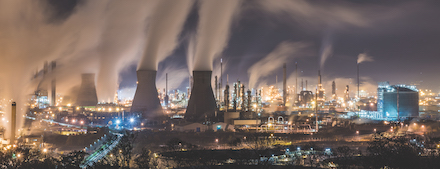
Above: Huge industrial centres like the Grangemouth refinery in Scotland could be an attractive market for locally-produced nuclear hydrogen
Today, some 90 million tonnes of hydrogen are generated worldwide annually but the drive to achieve net zero is expected to see demand for the gas soar over the coming decades. According to a recent analysis by the International Energy Agency (IEA) demand for hydrogen could reach 500 million tonnes or more by 2050, pushed by the need for alternatives to fossil fuels.
The vast majority of hydrogen produced today is derived from steam reformation of natural gas, making most of the hydrogen available in today’s market essentially a fossil fuel. However, the low-carbon alternatives – so-called green hydrogen produced from electrolysis powered with renewables or pink hydrogen derived from nuclear powered electrolysis – is prohibitively expensive.
At least it was. With the geopolitical impact of the conflict in Ukraine pushing global gas prices sky high and redoubling the focus on both low-carbon alternatives and security of energy supply, the opportunity for nuclear-powered hydrogen is bigger than ever.
Even before the Ukraine debacle and events such as the sabotage of the Nord Stream gas pipelines, a 2021 report from the IAEA had concluded that if “natural gas prices rise above US$20 per million British Thermal Units (BTUs), the optimal method of hydrogen production is electrolysis powered by a mix of nuclear and renewables.”
More recently though, an analysis from the OECD’s Nuclear Energy Agency (NEA) and titled ‘The Role of Nuclear Power in the Hydrogen Economy: Cost and Competitiveness’ concludes that, given current gas price volatility and overarching policy ambitions, with the right initiatives in place the prospects for nuclear power in a hydrogen economy represent a significant opportunity.
The nuclear cost opportunity
The NEA’s report highlights the changed cost differential as a key factor in the emergence of competitive nuclear-generated hydrogen. Certainly steam reformation of methane had been cheaper prior to the conflict, but now that position has not only reversed but is likely to remain so for the foreseeable future.
According to the NEA, the competitive gap between steam reformation of fossil fuels and water electrolysis is expected to close by 2025 as the water-splitting technology continues to improve and reaches maturity. However, given the current market dynamics this economic gap may be bridged far sooner than previously anticipated.
Even though the NEA argues that “electrolytic hydrogen production at large scale below US$2.5 per kg H2 will be hard to achieve in most places in the world by 2035” they point to the extreme volatility in gas prices. Assuming a gas price of US$100 per MWh, actually below the prices in certain regions of the world in Q2 2022, they conclude that the cost of hydrogen production from steam methane reformation is expected to significantly increase. The NEA analysis concludes that “hydrogen production costs from steam methane reforming with carbon capture, utilisation and storage (CCUS) is estimated at US$5.87 per kg H2, or 65% more expensive than the least competitive option”. Although is this analysis the least cost option is identified as offshore wind, they note that the hydrogen market is likely to become increasingly fragmented, and the availability of regional resources will largely determine both the primary production technology and the final cost of hydrogen.
Furthermore, as nuclear power is both dispatchable and large-scale, there are additional opportunities associated with industrial co-location. This approach would minimise infrastructure costs for hydrogen storage, transport and distribution. Indeed, the report estimates infrastructure costs for a nuclear-based value chain at around US$ 0.16 per kg H2 for a 500 MWe system that is meeting the continuous demand that might be expected from a large-scale industrial complex. When a variable output renewable production is considered in a similar application, the NEA estimates these additional costs at around US$0.77 per kg H2. As a result, taking the entire value chain and production costs combined, nuclear stands out as a competitive solution.
In fact, says the NEA, “at a given electrolyser scale, the larger volume and continuous production of a nuclear-based hydrogen value chain allow for a cost-efficient deployment of all infrastructures.”
Putting policy in place
Although the market fundamentals are positive and the long-term prospects clear, there are a number of challenges that must be addressed if nuclear power is to achieve its potential. Technology, policy and regulatory barriers remain major obstacles to realising this long-term expansion in the hydrogen economy. It requires ambitious policy initiatives to support hydrogen deployment and to engage stakeholders in the short term.
The success of research, development and demonstration programmes, a strong and constant political commitment, and the ability of stakeholders to set and agree upon technical and regulatory frameworks over hydrogen handling and trading are key for future hydrogen deployments, the NEA says.
The NEA outlines several policy recommendations that must be acted upon to realise industrial scale pink hydrogen. For example, they argue that as an immediate first step it is essential to demonstrate that large-scale, low-carbon water electrolysis is a viable alternative to the incumbent carbon-intensive hydrogen production technology. They further indicate that ambitious demonstration initiatives are required to answer the economic, engineering and regulatory questions raised
by large-scale low-carbon hydrogen production plants and value chains, whether those systems are based on renewables, current Generation-III light water reactors or a combination thereof.
The NEA also recommends developing policy frameworks that allow the broad-based production of low-carbon hydrogen. To achieve this, they suggest developing reference net zero pathways which underline the importance of rapidly scaling up the production of low-carbon hydrogen. “Restricting energy sources to produce low-carbon hydrogen will limit deployment in the short term and lead to additional system costs in the longer term,” the NEA notes.
A further recommendation is making sure that the full cost of hydrogen production and delivery is taken into account by estimating the cost for storage, transformation, transport and distribution, which “can represent sizeable additional costs for hydrogen delivery”. It is essential to take into account the entire value chain requirements to assess a project’s overall business case and to design cost-efficient infrastructure, they note.
Finally, the NEA recommends that over the mid-term, research and development to improve the efficiency of hydrogen production should be increased as “methane pyrolysis or water thermochemical cycles, possibly in conjunction with Generation IV reactor technologies, are promising low-carbon options that can reduce the primary energy requirements for hydrogen production.”
Action on nuclear hydrogen
Given the scale of opportunity there is already growing interest worldwide in nuclear-generated hydrogen. In the UK, for instance, it has recently been reported that chemicals giant INEOS is holding exploratory talks with Rolls Royce that could see SMR technology producing the hydrogen needed to decarbonise the huge Grangemouth refinery in Scotland. There are also positive policy developments along the lines suggested by the NEA. This year the state government of North Rhine-Westphalia in Germany confirmed €770,000 in funding to support a feasibility study for the construction of a 100 MW water electrolysis plant for the production of green hydrogen at the INEOS site in Ko¨ln. INEOS has previously revealed plans for a €2bn package of green hydrogen projects across Europe. Meanwhile, the landmark Inflation Reduction Act recently signed by US president Joe Biden allocated US$9.5bn for clean hydrogen production, with US Department of Energy assessments suggesting that nuclear energy could potentially produce up to 15% of the total national demand.
The central conclusion from the NEA’s latest study is that nuclear energy can produce low-carbon hydrogen at large scale and at competitive costs. Fundamentally though, the sheer scale of the future hydrogen economy represents a huge opportunity for nuclear power. Electrolysis processes typically require around 50 kWh of electricity to produce 1 kg of gas. Given current hydrogen production of about 90 million tonnes, decarbonising this alone would require something of the order of 4500 TWh of low-carbon electricity every year. The IEA forecasts that by 2030 around 80 million tonnes of hydrogen will be produced annually through electrolysis. This represents an additional electricity demand of 4050 TWh, or approximately 1.5
times the current annual demand for the whole of Europe. Scaling this hydrogen production up to fully 500 million tonnes inevitably means increasing dedicated clean energy production by several orders of magnitude. These figures make clear both the scale of the opportunity and the enormity of the challenge.
In its latest forecast for global nuclear capacity, the IAEA has increased its high case scenario by 10% compared with only a year ago and in 2021 the Agency had revised its up annual projections for the first time since Japan’s Fukushima Daiichi nuclear disaster a decade previously. In its high development scenario, the IAEA now anticipates world nuclear generating capacity more than doubling to 873 GWe by 2050, compared with current levels of around 390 GWe. As IAEA Director General, Rafael Mariano Grossi, said: “We are at a defining moment in the world’s transition to a more secure, stable and affordable energy future.” Nuclear generated hydrogen could be a big part of that clean energy future.