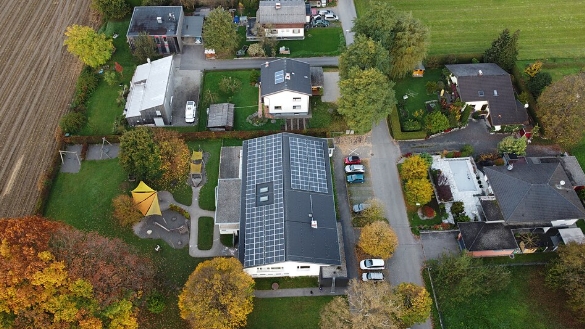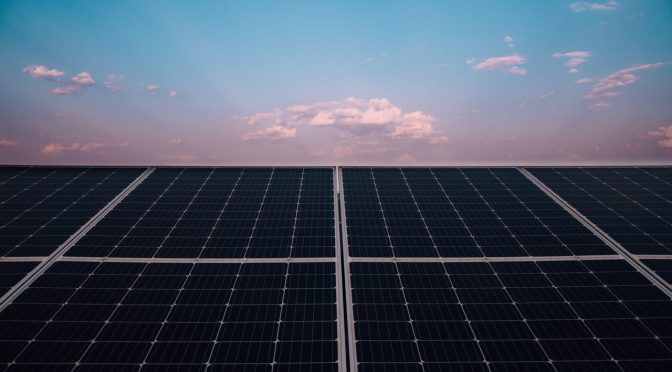
Australia has the world’s highest share of rooftop solar per capita. With installations in more than 30% of the country’s homes, capacity topped 19 GW in 2022. The estimated 3 GW of rooftop PV projected to be installed this year alone will provide electricity to over 650 000 additional households, or about 6% of all Australian residences. And a further 30 GW of rooftop solar development is expected by 2030.
Deployment is moving at speed in other regions, too. The European Union added more than 23 GW of rooftop solar in 2022. Around 16 GW of distributed PV is already operational in India, which has a target to achieve 500 GW of installed capacity for electricity generated from non-fossil fuel-based technologies by 2030. In Brazil, distributed PV deployment has exceeded expectations, with 7.8 GW added last year and close to 17 GW of total capacity installed.
Looking ahead, in the IEA’s Net Zero Emissions by 2050 Scenario, the number of residential buildings worldwide with solar PV panels increases fourfold, from 25 million in 2020 to 100 million by 2030, then more than doubles to 240 million by 2050. Distributed PV is a pillar of clean energy transitions around the world, providing benefits for consumers and the climate. There are also economic upsides: Rooftop solar PV, the power generation technology that requires the most labour to install, is an engine for job growth.
Momentum is substantial. What needs to be done to ensure grids are ready for immense distributed PV growth?
Booming distributed PV adoption contributes to the lowering of both carbon dioxide emissions and consumers’ bills and can support power system efficiency. However, it also increases the complexity of managing power flows and maintaining the stability of the power system, particularly when it comes to how electricity is distributed. As a result, transmission system operators and distribution companies need visibility on where installations are located and their performance over time.
Distributed PV also requires more sophisticated forecasting tools to account for how much electricity is produced through distributed PV and consumed locally, and to factor in all-important changes in the weather and cloud coverage. A US study estimated mis-forecasting the adoption of distributed PV could cost utilities USD 7 million per terawatt-hour sold.
If deployment is not adequately managed, technical issues can occur, including disturbances to grids, such as violations of voltage limits at the distribution level. Or, if distributed PV production exceeds demand, excess electricity could flow upstream (from low to medium or high voltage), damaging substations and other grid assets.
The lack of adequate management of distributed PV deployment and integration can also create economic challenges, both for distribution companies and for electricity consumers. Distribution companies receive compensation for the cost of maintaining, operating and investing in grids through network tariffs and charges, which are paid for by consumers connected to the grid. If these charges are not adequately passed on to consumers using distributed PV, there is a risk of discrimination, since consumers without distributed PV might need to compensate for these costs through higher network tariffs and charges on their end.
Anticipating challenges is key to maintaining distributed PV expansion
Effective distributed PV deployment and integration at scale thus requires modern, digitalised grids and digital tools. These innovations will alleviate the challenges of managing increasing distributed PV capacity while fostering greater system efficiency.
Digitalisation is already supported by the imperative to reduce technical and commercial losses, optimise commercial operations, and lower costs. The tools to address these issues, however, may not be well suited to easing the integration of distributed PV into the supply mix. PV-specific approaches are essential, such as matching excess solar PV generation during the day with EVs through smart charging or pairing distributed PV with battery storage. These solutions can avoid curtailment of PV generation, reduce peak loads and optimise spending to reinforce electricity grids.
Available tools also include digitally enabled distributed PV registries, which users can access through online portals and apps. These registries provide the information needed to better deploy distributed PV and manage the broader power system.
Smart inverters convert direct current from PV panels to the alternating current electricity grids need and can automatically adjust output to maintain grid stability. These inverters can support voltage and frequency control, reduce energy losses, enable granular management of resources, and enable more effective identification of faults and subsequent service restoration. A study in California estimated smart inverters could create up to USD 1.4 billion in annual savings by increasing reliability, power quality and system efficiency. Another study in Australia estimated coupling smart inverters with optimally sized battery storage could reduce power curtailment by 47%.
Digital tools to analyse data from bi-directional smart meters (which measure both electricity flows from the grid to consumers and from distributed PV to the grid) can help detect the location of distributed PV installations and provide visibility on customers’ generation and consumption patterns. This can better support the allocation of network tariffs and charges and help distribution companies and transmission system operators improve forecasting and system efficiency. These tools also allow distributed PV owners to respond to incentives in real time, provide services to the grid and engage in peer-to-peer trading. A pilot project in Australia showed the generation forecasted using traditional methods was 200 MW higher than near real-time generation forecasted using granular smart meter data. When coupled with real-time messaging, it resulted in a 35% reduction of energy bills.
Digitalisation will unlock opportunities for consumers
Policy makers and regulators have a range of means to leverage digitalisation in order to improve the management of growth in distributed PV and unlock its full potential in support of the clean energy transition.
Measures can include mandates to create utility-level, statewide or national registries of distributed PV systems, as seen in Australia, the United Kingdom and California in the United States. The adoption of smart inverters can also be required, as in Australia, Italy and the US states of California, Hawaii and New Mexico, with Brazil and India discussing similar measures. Finally, mandates can support the deployment of smart meters for distributed PV installations and the creation of platforms for managing, sharing and analysing data.
Policy makers can encourage stronger institutional links and more coordinated planning between transmission system operators and distribution companies – key to integrating higher shares of distributed PV. This would also facilitate the adoption of integrated power sector planning that utilises a wider range of real-time data sets and advanced analytics.
Policy makers and regulators can use digital tools to develop financial incentives, such as retail price signals that prioritise the maximisation of individual or collective self-consumption, especially at peak times. They can also allow distributed PV to provide ancillary services to power systems, helping the electricity grid maintain balance between generation and demand. By providing such services, distributed PV owners or aggregators – entities that manage a portfolio of multiple distributed resources to offer services such as flexibility to power systems – can be remunerated for such services. Policy makers can also promote innovative business models that enable energy communities and peer-to-peer trading of distributed PV energy amongst consumers and prosumers (consumers who also generate electricity).
Distributed PV deployment is expanding fast, accelerating the clean energy transition while calling for an increased focus on how to manage this growth. Digitalisation, an integral part of energy policy making, will ensure emerging risks from rapid distributed PV deployment are managed, and the benefits are fully unlocked.
The IEA, under its Digital Demand-Driven Electricity Networks (3DEN) Initiative, is working with countries around the world to strengthen awareness, enhance knowledge and build capacity, leading to new and improved policies to support the deployment and use of digital technologies for the clean energy transition. More details can be found in the initiative’s flagship report, Unlocking Smart Grid Opportunities in Emerging Markets and Developing Economies, which was unveiled at a special event on digitalisation for efficiency, resilience and decarbonisation in June.
Policy makers have many options to expedite digitalisation
This work forms part of the Digital Demand-Driven Electricity Networks Initiative, supported by the Clean Energy Transitions Programme, the IEA’s flagship initiative to help energy systems worldwide move towards a secure and sustainable future for all.