 Contributed by Erik Thiele, Global Technology Manager, Hydrogen Economy, Chemours
As with many advanced technologies, proton exchange membrane (PEM) water electrolysis had its beginnings in the space program. According to the National Institutes of Health (NIH), the first use of PEM water electrolysis occurred in 1960 during NASA’s Gemini Project, which had the objective of proving out new technologies destined for use in the upcoming Apollo moon missions. NASA scientists needed a power supply for the Apollo missions that would last substantially longer than the battery packs used in the relatively short Mercury piloted flights. At that time, no battery technology was adequate.
After investigation, NASA scientists settled on the use of a PEM water electrolysis system to separate the water into its components—hydrogen and oxygen. The hydrogen would be passed to a PEM fuel cell, which would generate the electrical power to energize the onboard electrical equipment, while the oxygen would be used to provide a breathable atmosphere for the astronauts. This approach proved successful, and NASA adopted the scheme for all its Gemini and Apollo missions.
Since those early days, the energy efficiency, durability, and reliability of PEMs have continued to improve, and their application has expanded. PEM electrolysis has become the leading method of industrial chlor-alkali production, which is based on an operating scheme similar to water electrolysis, except that the input fluid is a concentrated brine solution. With brine (saltwater) as the input, a PEM chlor-alkali cell produces three marketable products: hydrogen gas, chlorine gas, and sodium hydroxide (caustic soda) solution.
Migration of PEMs to the hydrogen economy
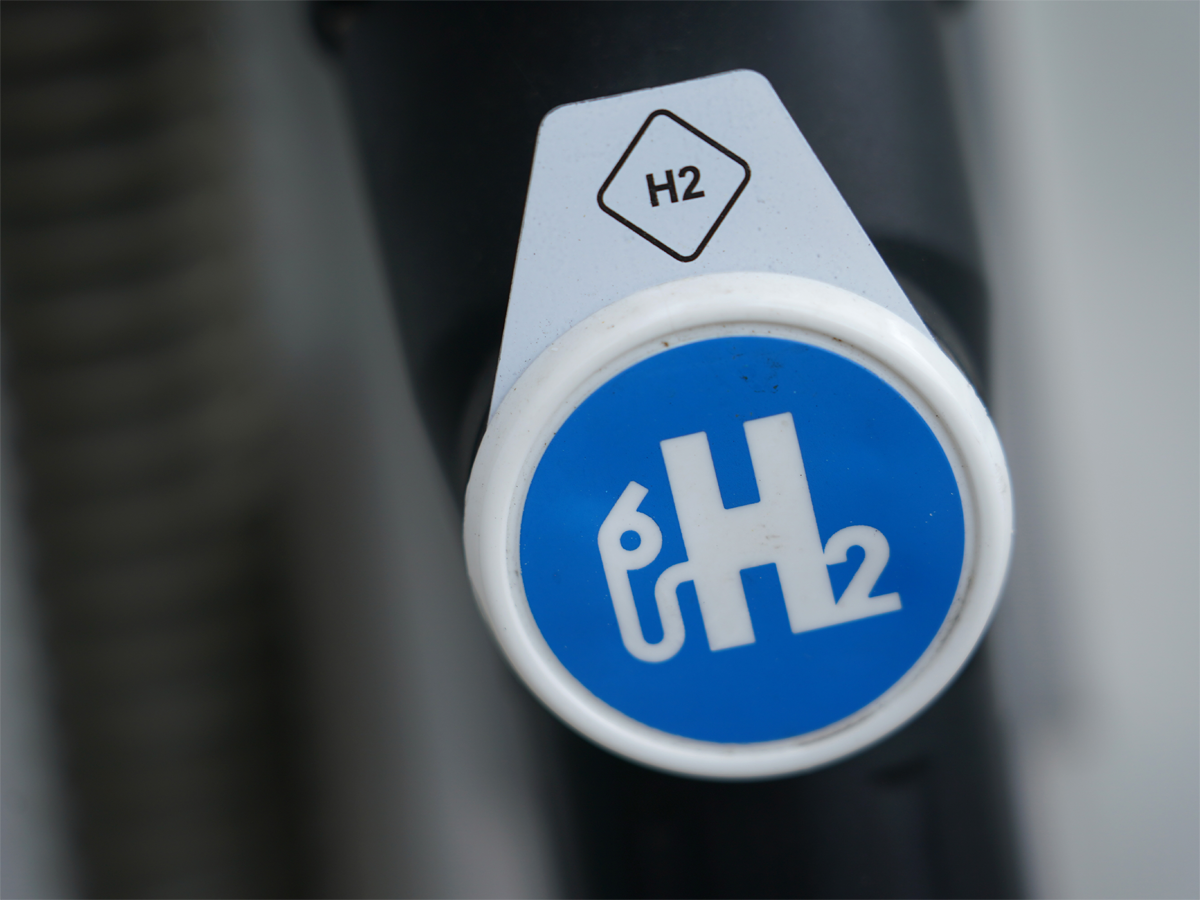
While the key products of PEM chlor-alkali cells have been chlorine (widely used in water purification and sanitation applications) and caustic soda (one of the most widely used industrial chemicals in the world), PEM water electrolysis has shifted in the past decade toward the production of hydrogen.
PEM water electrolysis is expected to become one of the most cost-efficient methods of producing green hydrogen—using renewable energy to break water into hydrogen and oxygen, and then extracting the hydrogen for independent use. Furthermore, hydrogen promises to soon become one of the most versatile energy carriers available, as it can be used in large stationary electrical production plants, in mobile (transportation) energy systems, and as an easily transportable fuel.
In the first two of those applications, PEMs hold the key to the efficient production and consumption of sustainable hydrogen. For central station power generation, large PEM fuel cell stacks can use hydrogen to generate electricity and clean water. In mobile platforms, a much smaller PEM fuel cell can use hydrogen gas stored in a pressurized onboard tank, combined with atmospheric oxygen, to produce the electricity needed to power the vehicle’s electric drive motors with only water vapor as exhaust. Such systems can be scaled to propel everything from passenger cars to over-the-road tractor-trailers and large, off-road construction equipment.
The drive toward green hydrogen
In the hydrogen economy, fossil fuels will give way to hydrogen as the primary energy carrier. Several technologies can currently be used to generate hydrogen, but they differ greatly in their carbon footprint. So a color code has been developed to differentiate hydrogen sources based on the production method. While the color-coding system has grown in detail and complexity, the four colors listed here are the most common:
Gray hydrogen: Derived by steam reforming methane sourced from natural gas.
Brown hydrogen: Produced via coal gasification.
Blue hydrogen: Gray or brown hydrogen produced in a system that adds carbon-capture-and-storage (CCS) components to prevent the CO2 generated by the process from escaping into the atmosphere.
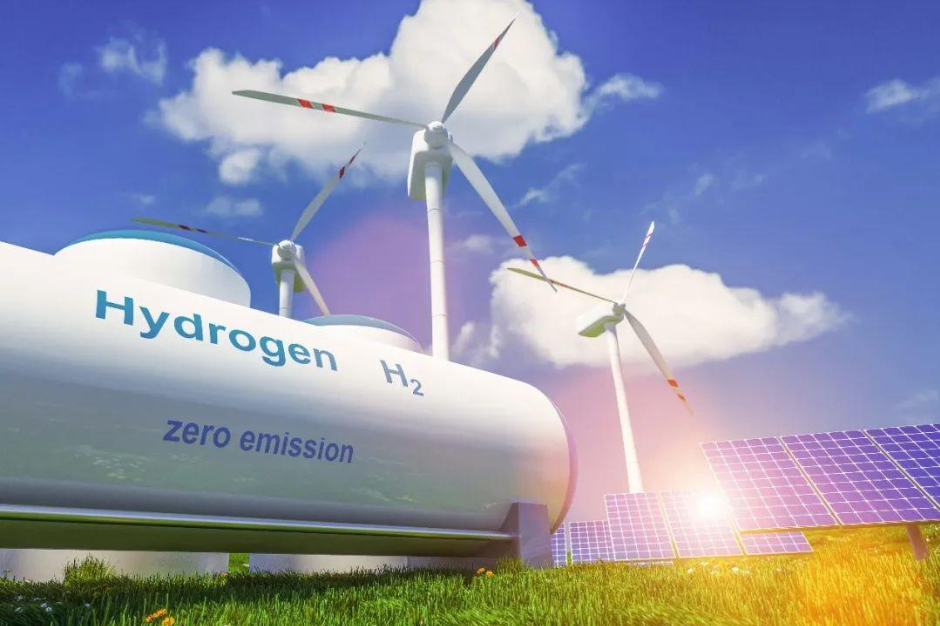
Green hydrogen: Produced by the electrolysis of water, using energy generated by sustainable, zero-carbon technologies (e.g., hydro, wind, solar, or nuclear). Properly designed, green hydrogen production facilities maintain a zero-carbon footprint across the entire operation.
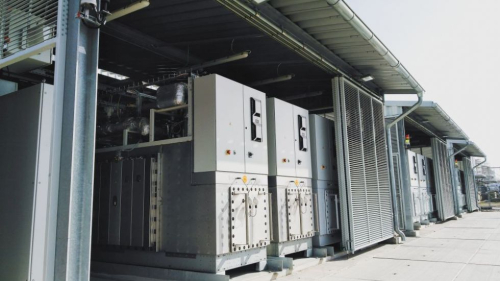
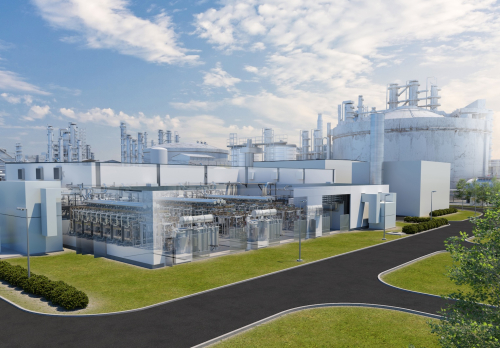
Fortunately, electrolyzers offer great versatility in site location. The only requirement is the availability of abundant water, so they can be located near wind farms, solar arrays, hydropower, nuclear generating stations, and desalination plants which continue to gain importance as a source of pure water. The hydrogen and oxygen the electrolyzers generate can be easily distributed to the point of use by truck, rail, or pipeline—depending on available infrastructure.
The role of PEMs in providing adequate sustainable energy availability
One of the most vexing challenges for two of the four current renewable power generation technologies is that wind and solar are inherently intermittent. Only hydroelectric power from large dams and central station nuclear plants offers consistent, controllable power output over time.
Practical use of wind and solar sources, by contrast, requires means to compensate for their fluctuating power output. The obvious solution is to store excess power from solar arrays and wind farms when their output exceeds demand, then make it available whenever demand requires it.
Here again, PEMs can make a substantial contribution to sustainability. A relatively new technology—flow batteries—promises to provide large-scale, long-duration, economically competitive energy storage to help mitigate the natural fluctuations in sustainable energy production.
At the heart of a flow battery is a PEM cell, which enables the stack to act as a reversible, electrochemical storage system. The membrane separates two electrochemically active liquid solutions (e.g., vanadium electrolytes containing different valence states) that are stored in external tanks. These PEM-based cell stacks can be combined to form flow battery facilities with total energy capacity in the megawatt-hour range. When a rise in grid demand exceeds available capacity, the positive and negative liquid electrolytes are pumped from storage tanks to the PEM cell stacks. The stacks then generate the power needed to meet demand. This is the flow battery’s discharge cycle. When available grid capacity exceeds demand, excess power can be supplied to the cell stack to regenerate the positive and negative electrolytes, which are returned to their respective holding tanks, ready for the next demand cycle. This is the flow battery’s charge cycle.
Unlike lithium-ion and other traditional battery technologies, flow batteries offer the unique ability to decouple (and scale independently) their power output and energy storage capacity. In addition, the liquid electrolytes used in flow batteries are non-flammable and can be recycled. The electrical capacity of a flow battery is determined only by the inherent capacity of the cell stack and the stored electrolyte volume. Increasing the energy capacity of a flow battery is therefore a simple matter of increasing the electrolyte storage tank volumes.
Fuel cells for electric vehicles (FCEVs)
According to the EPA, in the United States, the transportation sector accounts for more than 55% of total nitrogen oxide emissions, as well as substantial benzene, formaldehyde, and diesel particulate-matter emissions, all of which are known or suspected to have detrimental health and environmental impacts.
Because internal-combustion-engine (ICE) vehicle emissions contribute to air pollution and climate change, substituting FCEVs powered by zero-carbon-emission sources such as green hydrogen can mitigate transportation’s adverse impact on both emissions and climate.
How PEM fuel cells work
The most common type of PEM fuel cell produces electricity via a reaction of hydrogen fuel and oxygen from the atmosphere, producing only water and heat as byproducts. A PEM fuel cell’s energy conversion is performed by two chemical reactions separated by the PEM. Each chemical reaction occurs at one of two specific electrodes: the anode (negative electrode) and the cathode (positive electrode). Hydrogen gas enters the anode side of the cell, and oxygen (air) enters the cathode side. With the help of a catalyst, hydrogen is broken down into protons (positively charged hydrogen ions) and electrons. The electrons must flow through an external circuit, providing usable electricity that can power any electrical device, including vehicle motors.
Simultaneously, the protons travel through the PEM to the cathode side of the cell. At the cathode, the protons recombine with the electrons returning from the external circuit and oxygen from the air to form water. The clean water is discharged from the cell, carrying excess heat with it.
Competing with internal combustion engines
Today, most electric vehicles are driven by electric motors, powered by electricity stored in an onboard battery pack. FCEVs, on the other hand, use an onboard hydrogen-powered PEM fuel cell to produce electricity to power the vehicle’s electric drive motor(s). The only on-vehicle emissions are clean water and heat. FCEVs not only offer environmentally clean transport but also provide an operating range and refueling speed competitive with diesel- and gasoline-powered vehicles.
Hydrogen fuel cells provide a promising clean-fuel solution, especially for heavy vehicles such as long-haul tractor-trailers, where long operating ranges and fast refueling are crucial for profitable operation. To satisfy their need for efficient operation, fuel cell engineers need PEMs that offer custom thickness options, high conductivity, superior strength, and chemical durability.
In the future, fuel cells are expected to be a primary choice to power transportation, replacing fossil-fuel-powered vehicles with hydrogen-powered buses, trucks, cars, trains, airplanes, and freight ships. As new uses and applications appear on the market, winning companies will need an innovative membrane partner to ensure that fuel cells meet performance and reliability requirements for their applications.
Dr. Erik Thiele is Global Technology Manager for the Hydrogen Economy business with The Chemours Company. Erik earned his doctorate degree in Materials Science & Engineering from the University of Pennsylvania. He has spent his professional career with DuPont and Chemours in roles that include research, technical service, sales, marketing, and R&D management. He was based in Switzerland for nearly 20 years before returning to the USA in 2021. His interests include polymer science, particle and surface science, processing methods, and experimental statistics. In his spare time Erik enjoys hiking, kayaking, and collecting vintage LPs.