Researchers under the guidance of Associate Professor Takashi Tachikawa of Kobe University’s Molecular Photoscience Research Center have successfully developed photocatalysts that are capable of changing an efficient level of hydrogen from water using solar light.
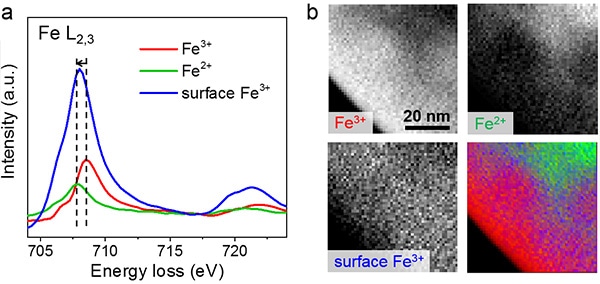
It is anticipated that approaches similar to this one, which involves using titanium-modified hematite mesocrystal-based photoanodes, could form the basis for a commercial solar water-splitting system. This would allow clean fuel hydrogen to be made more economically and easily than before, making it a feasible source of renewable energy.
This was a collaborative research project with Nagoya University’s Institute of Materials and Systems for Sustainability (Professor Shunsuke Muto) and the Japan Synchrotron Radiation Research Institute (JASRI) (Chief Researchers Koji Ohara and Kunihisa Sugimoto).
The study outcomes were first published in the online journal Nature Communications on October 23rd, 2019.
Background
With the increase in issues related to energy and environment, hydrogen has gained a lot of attention as a possible clean energy source of the future. Photoelectrochemical (PEC) water-splitting (also called solar water-splitting) has been suggested as a renewable way to generate hydrogen.
Theoretically, it is a straightforward technique requiring a photocatalyst and sunlight to acquire hydrogen from water. Industrial-scale PEC water-splitting systems would reduce the commercial cost of hydrogen, making it a useful energy source.
However, it is necessary to enhance the light-to-energy conversion efficiency to make PEC water-splitting a feasible technique for generating hydrogen on a large scale. Upon exposure to light, electrons and holes (created by the electrons) form on the surface of the photocatalyst.
These charges then dissociate to generate oxygen and hydrogen from water molecules. Although experiments with a number of different photocatalysts have been performed, a reoccurring issue is that the holes and electrons recombine on the catalyst surface, bringing down the conversion efficiency. Other problems include the durability of the catalyst and cost.
In order to regulate the dynamics of electrons and holes via precise arrangement of nanoparticles, Associate Professor Tachikawa and colleagues developed a technique using “hematite mesocrystal-based photoanodes” as a photocatalyst. They succeeded in achieving a highly efficient light-to-energy conversion.
Mesocrystals are superstructures of nanoparticles with extremely ordered structures. This makes them ideal for charge separation and transport. Moreover, hematite is a copious natural mineral—making this a potentially economical technique.
Research Methodology
Mesocrystal-based photoanodes
The mesocrystals with extremely ordered nanoparticles were produced via solvothermal synthesis (a technique of chemical compound production using high temperature and pressure). These were then used to make the mesocrystal-based photoanode. This high-temperature exposure developed oxygen vacancies, Vo (small oxygen-deficient spaces) within the mesocrystals because of the partial fusion of the interface between the nanocrystals.
This enlarged the carrier density of the mesocrystals, thus enhancing their conductivity further. Inspections of the structure and composition of the mesocrystals also exposed pores on the surface of the particles. These particle attachments and mesopores seem to promote charge mobility and light absorption, respectively.
As stated earlier, one of the key problems with PEC water-splitting is that the holes and electrons recombine before the water-splitting reaction (the separation of hydrogen and oxygen in water molecule) can efficiently happen. It was proposed that the electron-hole pairs produced near the Vo possess longer lifetimes. This would make it easier for the holes to escape from recombination with the photo-generated electrons, thus enhancing the conversion efficiency.
Titanium-modified hematite
The photoanodes were developed using titanium-modified hematite (Ti-Fe2O3) mesocrystals. Ti alteration was performed with the aim of increasing the conductivity and to simplify charge separation.
A solar water-splitting technique was formulated, where the Ti-altered hematite photoanodes were positioned in an alkaline water solution under illumination with imitation sunlight. A platinum (Pt) electrode was employed as the cathode. The oxygen molecules were produced from the mesocrystal-based photoanode and the hydrogen molecules were generated from the Pt counter electrode.
Subsequently, tests were done to establish the photocurrent density of the photoanodes. A photocurrent can be defined as a reverse current that results from the electrons and holes moving toward the cathode and anode, respectively. A high photocurrent density would signify powerful conversion efficiency from sunlight to hydrogen through PEC water-splitting.
The photocurrent densities of Ti-modified hematite photoanodes with varied film thicknesses were compared under two illumination modes. It was discovered that back illumination (where the surface of the hematite is lit via the FTO glass) produced more current in all samples than front illumination (where the light has to pass via the electrolyte before it can reach the hematite).
The film thickness that was found to be most efficient was 900 nm. These photoanodes were demonstrated to have a photocurrent density of 2.5 mA cm−2 at a potential of 1.23 V. This technique, using back illumination, also solves the issue of light scattering caused by the evolved gas bubbles. Light scattering is another problem that can decrease the conversion efficiency.
Moreover, the researchers learned that incorporating a cobalt phosphate ion (Co-Pi) co-catalyst on the surface of the photoanodes further enhanced the photocurrent density to 3.5 mA cm−2. This photocurrent density is the maximum realized value thus far by employing hematite as the photocatalyst material under back illumination.
During solar water-splitting, the evolved gases H2 and O2 were formed over a three-hour time period at a stoichiometric ratio of 2:1. Moreover, the photoanodes did not show any apparent decrease in current spanning a 24-hour period, signifying stability under prolonged operating circumstances.
Conclusions
This study revealed that Ti-modified hematite mesocrystal photoanodes show a high production efficiency of hydrogen from water under back illumination. The analyses performed during the course of this research indicate that these photoanodes with Vo and mesopores possess properties that make them extremely suitable for solar water-splitting—including efficient light absorption, outstanding charge mobility, and long-lived holes.
However, certain recombination problems in the film have not been solved yet. Performance could be additionally enhanced by treating the surface. More and more academic and industry research partnerships into conversion rate improvement and the appropriateness of other types of mesocrystal photoanodes could result in the quick realization of a commercial PEC water-splitting system.