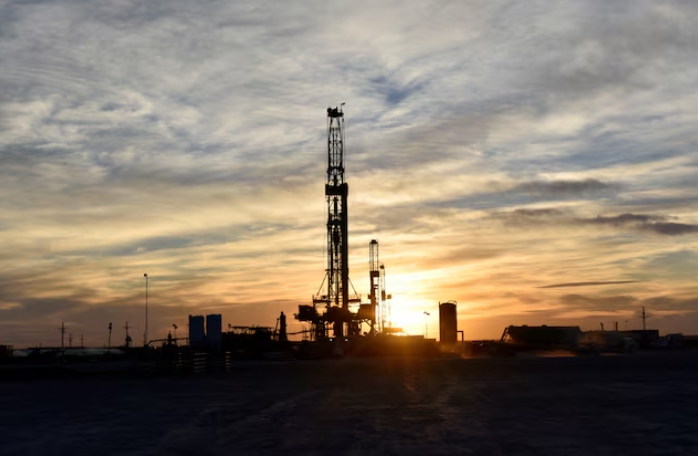
Illustration; Source: ExxonMobil
The next energy growth spurt is expected to come from Asia due to the increase in population, which is also upping the energy demand ante. The alleged risk to the security of global supply, which is perceived to stem from the focus on net zero targets, was spotlighted at an event organized by the Association of International Energy Negotiators (AIEN) in Bangkok, Thailand.
The contemplation of ways to turn conflicts into opportunities for natural gas exploration and production in Southeast Asia led Dr. Kurujit Nakornthap, Executive Director of the Petroleum Institute of Thailand and former Permanent Secretary for the Ministry of Energy, to highlight the potential of net zero to weaken energy security.
Nakornthap pointed out: “The stone age didn’t disappear because we ran out of stone. Similarly, the oil age won’t disappear because we ran out of oil. However, focusing on net zero targets alone may lead us to neglect or decrease investment to find new oil and gas deposits, and thus bring about less energy security and volatile prices.
“By 2050 the population will increase to potentially 10 billion. More than 60% will be in poor parts of the world and will need cheap energy. The targets for 2050 were too aggressive but that was to stop us being complacent. In my view, the real target should be 2070.”
The Petroleum Institute of Thailand’s Executive Director looked into the energy trilemma and the journey to net zero, offering his take on the meaning behind sustainable development, which for him should pave the way to satisfy the existing energy demands without compromising future generations’ ability to meet their own needs.
While outlining viable options to help provide energy at an affordable price to the people, Nakornthap explained: “CCS is important, but it will not work as a CSR project. It is too expensive. To make it less expensive, it needs to be run like a business project, not a charity. Natural gas is a necessary part of energy security.
“It serves as a bridging fuel towards the transition, and will do so for at least for 30 years. It is a cleaner form of energy with lower carbon intensity. Responsibly produced oil and gas will provide energy access at affordable prices to a greater world population with lower carbon footprint.”
In line with this, he emphasized the giant size of the oil and gas exploration and production business in the Southeast Asian region, which is perceived to entail not only a big risk but also a reward of large proportions.
He went on to underline the need for such a business to have access to the best technology options available, with Thai domestic gas reserves at “a crisis level” and petroleum exploration and production in Thailand in “a very worrisome state.”
Reshaping energy security’s bedrock: More oil & gas or less?
According to Dr. Fatih Birol, Executive Director of the International Energy Agency (IEA), the global oil demand growth is slowing down, however, supply is set to surge, indicating a major jump in spare capacity this decade, thus, the oil industry’s response to the evolving landscape is expected to have “significant implications.”
While the demand for oil use is likely to be driven by economies in Asia, aviation, and petrochemicals, the gains are poised to be offset by rising EV sales, higher efficiency, and decreasing oil use in power generation.
Birol anticipates a surge in global oil production capacity, spearheaded by the U.S. and other suppliers in the Americas, which will outstrip demand growth through 2030 and put global markets on course for a major surplus later this decade, based on current energy policies and trends.
There is no doubt that optimism still prevails in the energy industry, as the oil and gas domain has even experienced a spike in confidence in the wake of the global energy crisis. In light of this, DNV’s research into the largest obstacle to reaching net zero goals pinpoints the cost of the energy transition as the main issue that needs to be overcome.
The viability of many projects is believed to be in a precarious situation driven by higher costs and supply chain disruptions, which are throwing cold water on the short-term flames of hope for further acceleration in the pursuit of electrification and renewables.
Kingpins of energy mix post-2050: Oil & gas and net zero face-off
The vision of an energy world beyond fossil fuels is often portrayed as a renewable-powered haven and climate salvation, but the opposition to such a utopian view is not ebbing away, instead, it seems to be growing in proportion of late. How expensive is the net zero road for Big Oil, their counterparts on the renewable side of things, and other players in the energy arena?
While the exact price tag is yet uncertain with estimates changing under the influence of other factors on the global stage, including economic woes and geopolitical shifts, the identity of those who will foot the entire net zero bill or the most significant portion of it also appears to be a mystery of sorts.
This veil of uncertainty covering key aspects of the green shift is believed to arise from the lack of a universal roadmap, which is missing due to the inability to find a one-size-fits-all silver bullet to the energy transition undertaking.
There is no such thing as just one universal energy supply source since even fossil fuels, which take up the largest slice of the global energy mix, offer more than one source but still do not have a monopoly over the energy mix despite being used to power around 80% of the world, with the remaining 20% running on alternative sources, seen as cleaner and greener options.
Last year, coal, oil, and natural gas comprised 82% of the global energy mix, based on the Energy Institute’s report on world energy. There is, however, an ultimate energy source widely considered to be the sun, which is often used as an impetus to advocate faster decarbonization and the global transformation to solar power and other low-carbon, carbon-free, and renewable energy sets of options, such as harnessing the onshore and offshore wind.
Transitioning away from fossil fuels to renewables and other clean energy alternatives, such as nuclear and hydrogen, is estimated to require not millions or billions but trillions on a global scale every year by 2050. McKinsey’s report points out that $9.2 trillion in annual average spending on physical assets is required to hit net-zero emissions worldwide by 2050.
“The dirty secret nobody talks about is how much all this is going to cost and who’s willing to pay for it,” highlighted Darren Woods, ExxonMobil’s CEO, while discussing the move to net zero earlier in 2024.
“[…] People cannot afford it, and governments around the world rightly know that their constituents will have real concerns. So we have got to find a way to get the cost down to grow the utility of the solution, and make it more available and more affordable so that you can begin the transition.”
Furthermore, Wood believes that policies currently being put in place are “not aggressive enough, and do not incentivize the right kind of actions to be successful.” For its part, the International Energy Agency predicts that reaching the net zero mark comes with a price of $4.5 trillion a year by 2030.
Many reports indicate that a total net zero bill by 2050 represents an investment of at least $100 to $125 trillion, give or take a few trillion, which is certainly no small feat. Some even argue that it is a tall order, given the current economic situation, high inflation rates across the globe, geopolitical instability, and upheavals.
Energy transformation: Seeking ways to counter uncertainty over net zero targets
Aiming to shed more light on whether net zero by 2050 was still seen as a feasible pathway by the public and if so, pinpoint those responsible for coughing up the trillions needed to build the energy infrastructure required to usher in a net zero economy, Offshore Energy asked industry experts and connoisseurs to weigh in on the issue by responding to two crucial questions: Is net zero by 2050 still feasible? Who should pay for the largest share of the global net zero costs?
The vast majority of the participants (55%) claim that the net zero by 2050 is not feasible while 45% still believe that this target can be reached, but disagree on the identity of the party responsible for bankrolling the endeavor to ensure a sustainable future.
Since 55% of all participants are under the impression that the net zero by 2050 is not reachable, they did not assign the payment of the biggest part of the global net zero costs to anyone in particular. In contrast, the largest portion (27%) of the remaining 45% is convinced that governments, the private sector, Big Oil, and all individuals have the responsibility to do their part to cover the costs of the net zero transformation.
On the other hand, 11% of those who believe net zero by 2050 is still possible lay the responsibility for settling the largest slice of the global net zero costs at governments’ doors while 7% think that the private sector and Big Oil should handle the funding.
The results concerning those tasked with paying the lion’s share of the global net zero costs align with Offshore Energy’s earlier survey when 10% of all participants said that the private sector should shell out most of the funds for a sustainable future.
In addition, 12% selected Big Oil as the primary money provider, 25% pinned the obligation on governments, and the majority (53%) underscored that forging out the trillions needed for the pivot to clean energy would require a combination of all three along with a contribution from individuals.
Decision time: Green energy shift or oil & gas?
Even though the best way forward to balance the scales to cover the net zero costs is still not fully developed even in the most developed countries, let alone worldwide, analysts remain hopeful that the global energy mix will leave fossil fuels behind during the coming couple of decades.
Only time will tell whether such hopes are justified and how things will play out, especially in light of the current global challenges, not just on the geopolitical and economic scene, but also within the energy sector itself.
Would pursuing all sources of energy supply to power the world alongside the accelerated implementation of decarbonization technologies be the right recipe in these trying times?