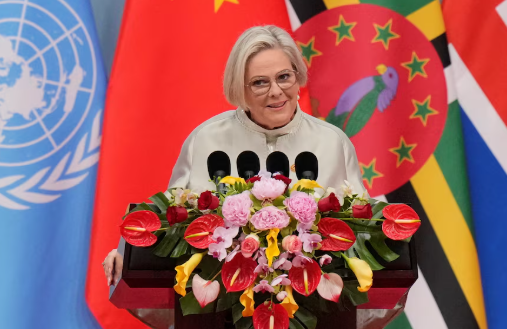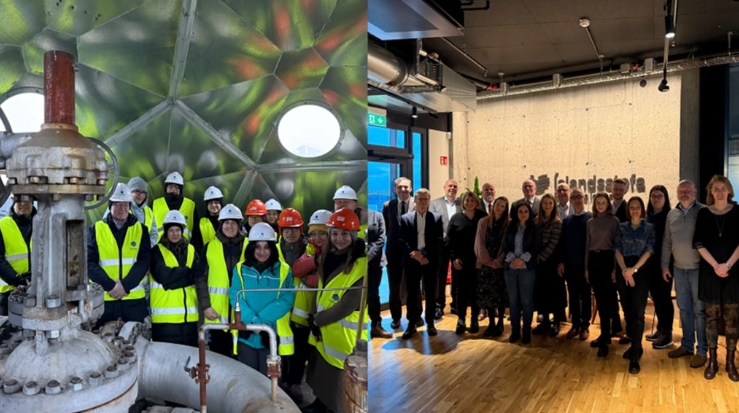
Geothermal Synergy welcome meeting with Iceland and Polish stakeholders
Financed by the FM EEA and Norway Grants, this project underscores the value of international cooperation in achieving sustainable energy goals. By combining Poland’s untapped geothermal potential with Iceland’s decades of expertise, the project aims to pave the way for a greener and more resilient energy future.
The FM EEA mechanism—a collaboration between Iceland, Liechtenstein, and Norway—has driven European renewable energy projects. This project aligns with its overarching goal to bridge knowledge, technology, and infrastructure gaps between participating countries. It also represents a significant step towards meeting Europe’s climate goals, as set out in the European Green Deal.
Poland has significant geothermal resources, primarily low-temperature, suitable for direct applications such as district heating, bathing, and industrial processes. However, limited infrastructure and regulatory hurdles have hindered full exploitation. Iceland, in contrast, has emerged as a global leader in geothermal energy. With advanced geothermal systems supporting 90% of its central heating and contributing 30% of its electricity production, Iceland exemplifies how to harness this renewable resource effectively.
However, at the end of 2022, Poland operated ten geothermal district heating systems with a combined capacity of 123.4 MW, marking a 26% increase since 2019. Additionally, shallow geothermal technologies, including heat pumps, have grown significantly, with over 900 MW of capacity installed by 2022.
The FM EEA framework offers Poland access to Icelandic expertise, creating sustainable development and mutual learning opportunities. Despite progress, the geothermal sector’s share in Poland’s energy mix remains marginal. Challenges such as limited infrastructure, high initial investment costs, and regulatory complexities hinder further development. Meanwhile, Iceland has established itself as a global leader in geothermal energy. Iceland’s geothermal resources support 90% of its central heating and contribute 30% of its electricity production, demonstrating the transformative potential of these resources when harnessed effectively.
The collaboration under the Geothermal Synergy project bridges Poland’s aspirations and Iceland’s achievements, fostering a mutually beneficial exchange of knowledge and expertise.
History of geothermal utilisation in Iceland
Icelanders have utilised geothermal energy since the Saga age, and the first settlers of Iceland in the 9th century, though, for the first centuries, this utilisation was very localised and had low intensity.
In the Saga of Grettir the Strong, the protagonist swims from the island of Drangey where he was in exile to the mainland where he warms himself up in a geothermal pool now called Grettir’s Pool. In the Laxdæla saga one of the main protagonists, Gudrún Ósvífirsdóttir, spends a lot of time in the warm pool that became her namesake. Geothermal pools were also used for cooking and washing clothes during this period, although this was only done as part of domestic life for those lucky enough to have such a pool nearby.
Around 1000, the Icelandic parliament, Althingi, decided to convert the country to Christianity. The local waters of lake Thingvallavatn are icy cold, so all the members were baptised in a warm spring called Vígdalaug (Consecrated Pool) near Laugavatn, some 25 kilometres away.
Later, during the Sturlunga Age in the mid 13th century, one of the chieftains, Snorri Sturluson, built a pool called Snorralaug (Snorri’s Pool) near his home at Reykholt. There is also evidence that he piped hot water into his home for direct use there. This is the first evidence of what might be called direct manipulation of geothermal waters or pools to benefit the population in Iceland. Before that, there is little evidence of manipulation of geothermal waters.
During the late Middle Ages and the 18th century, Icelanders mined sulphur for export. They did this near geothermal areas, though mainly since that was where sulphur was mostly concentrated and easy to mine.
So, throughout Iceland’s early history, geothermal pools and waters were used for various small scale, localised uses, from simple bathing pools to places of healing, for cooking or boiling food, washing clothes, and for more ceremonial purposes such as baptisms. The only large-scale utilisation came more from the sulphuric byproduct of geothermal activity than any direct use.
Industrial, or large-scale use of geothermal, did not begin in Iceland until the early 20th century when farmers in Mosfellssveit, just north-east of Reykjavík, started to pipe geothermal water into greenhouses to grow crops and for other industrial purposes. In 1930, the Reykjavík District Heating Company first set up a district heating system using geothermal water to heat buildings. Among the first buildings to be heated in this way were the Austurbæjarskóli school and Sundhöll Reykjavíkur, the Reykjavík Swimming Palace.
World War II put a pause in the plans to exploit geothermal energy in Iceland further, but after the war they continued at a moderate pace. The first geothermal power plant was opened in 1969 at Bjarnarflag in the North-East of Iceland, at 3 MW. Following the oil shock of the early and mid 1970s, the Icelandic government decided to ramp up the development of geothermal utilisation for both heating homes and power production, following recommendations from a study done by the National Energy Authority in 1970.
The Svartsengi power plant (from which the Blue Lagoon gets its waters from), was commissioned in 1976, and the following year the Krafla power plant in the north-east started production. Svartsengi also provided hot water for space heating to nearby towns. From 1990 to 2017 five more geothermal plants have been commissioned, all producing electricity, but some also providing hot water for municipalities and homes. The combined MW capacity for these plants is around 780 MW of electricity and around 850 MW thermal.
Various small and large district heating systems have also been opened up in Iceland over the past 50 years, ranging from small scale operations where farms and greenhouses are heated up with a local borehole, to entire towns benefiting from a central, geothermal heating system. By 2020, geothermal energy accounted for 89.6% of the energy used for space heating in buildings in Iceland.
Iceland’s rapid advances in utilising geothermal energy for the benefit of society led to her participating in the foundation of the United Nations University in the late 1970s through the creation of the United Nations University Geothermal Training Programme (UNU-GTP) that started operations in 1979 in cooperation with the National Energy Authority. Since then, more than 800 Fellows have received training in Iceland in all forms of geothermal exploration and utilisation from dozens of developing nations. Between 1991 and 2003, 14 Fellows from Poland received training at the UNU-GTP and went on to help build Poland’s geothermal infrastructure.
Geothermal energy in Poland
Poland’s geothermal energy sector has deep historical roots and significant potential for future expansion. While Poland’s history of geothermal use differs from Iceland’s, its resources offer unique opportunities for sustainable energy development. The country has been steadily developing its geothermal energy sector, particularly in direct use applications such as district heating, recreation, and balneotherapy.
The earliest evidence of geothermal use in Poland dates back centuries, particularly in regions like Ladek-Zdrój in Lower Silesia and Jaszczurówka in the Podhale region. Historical accounts suggest that hot springs were used for bathing and therapeutic purposes as early as the 13th century. The 19th and early 20th centuries saw increased interest in geothermal waters, particularly in the context of health resorts and balneotherapy.
Notable figures in Polish scientific history, such as Dr. Ludwik Zejszner and Prof. Stanislaw Sokolowski, contributed to early geothermal research. Their work laid the foundation for the systematic geological surveys that began in the 20th century, identifying Poland’s geothermal potential.
The modern era of geothermal development in Poland began with deeper exploration in the 1960s and 1970s. The first experimental geothermal wells were drilled in the Podhale region, confirming the feasibility of using geothermal energy for heating.
One of the most significant milestones came in 1979-1981, when the Banska IG-1 well was drilled to a depth of 5,261 meters, yielding thermal water with a temperature of 82°C. This discovery paved the way for the creation of Poland’s first large-scale geothermal district heating system in Zakopane and surrounding areas.
By 1992-1993, the Podhale Geothermal Heating Plant (Geotermia Podhalanska S.A.) was established, marking the beginning of large-scale geothermal heating in Poland with the contribution of MEERI PAS 1st Experimental Geothermal Plant in Poland, 1980/90s initiated geoDH and other geothermal uses in the country (Part of the Centre for Geothermics and Heat Pumps).
Today, Poland operates several geothermal district heating plants, including:
Podhale region (Banska Nizna, Zakopane, Bialy Dunajec, Poronin) – one of Central Europe’s largest geothermal district heating networks.
Mszczonów – pioneering reinjection technology for sustainable use.
Pyrzyce – an advanced system for municipal heating.
Uniejów – a model city for geothermal development, combining heating with tourism and balneotherapy.
Additionally, Poland’s geothermal bathing and recreation sector has seen rapid growth. Facilities like Termy Szaflary, Termy Bukovina, Termy Bania, and Chocholowskie Termy highlight how geothermal resources can contribute to local economies.
Poland has actively engaged in international partnerships to accelerate its geothermal development. One of the key initiatives supporting this effort is the Geothermal Synergy Project, a collaborative platform between Poland and Iceland under the EEA grants framework. The project has facilitated knowledge exchange, policy development, and technical cooperation, bringing Poland closer to fully utilising its geothermal potential.
Additionally, Poland is working towards integrating with the GEOTHERMICA Initiative, an international effort to advance geothermal energy research, innovation, and deployment. The initiative provides an essential framework for coordinating investments, reducing risks, and creating favourable regulatory conditions for geothermal expansion.
Poland aims to more than double its installed geothermal heating capacity by 2040, focusing on:
Expanding district heating systems in medium-sized cities.
Enhancing geothermal electricity production through pilot projects.
Integrating geothermal with other renewable sources, such as biomass and solar energy.
Developing regulatory frameworks to streamline geothermal project implementation.
While geothermal electricity production remains limited, Poland is exploring advanced technologies to increase efficiency and economic viability. The lessons from Iceland’s regulatory and technological success provide a valuable reference for Poland’s policymakers, energy developers, and municipalities.
Geothermal energy in Poland is at a turning point, with increasing investments, international collaborations, and a strong policy push toward sustainable energy diversification. As Poland continues to develop its geothermal heating and energy solutions, cooperation with Iceland and participation in European frameworks will be instrumental in accelerating innovation and market deployment.
With the right strategies and partnerships, Poland has the potential to become a leader in Central European geothermal energy development, ensuring a cleaner, more resilient energy future for its citizens.
Comparative geothermal conditions
Poland and Iceland have distinct geothermal characteristics, shaped by their geological settings. Poland’s geothermal resources are predominantly low-temperature, typically 40-90°C, making them well-suited for district heating, balneotherapy, and industrial applications. In contrast, Iceland benefits from high-temperature geothermal fields, often exceeding 250°C, enabling electricity generation and large-scale heating systems.
Despite these differences, the two countries complement each other in geothermal advancements. Poland can learn from Iceland’s well-established district heating systems, reservoir management strategies, and reinjection techniques to improve resource sustainability. Meanwhile, Iceland can benefit from Poland’s innovative integration of geothermal with multi-source energy systems, such as Konin’s hybrid model combining geothermal, biomass, and solar energy.
By leveraging Icelandic expertise, Poland can accelerate the expansion of its geothermal sector, while Iceland can explore new applications of its technology in lower-temperature settings. This cooperation fosters mutual innovation and strengthens both nations’ contributions to Europe’s renewable energy transition.
Objectives of the Geothermal Synergy project
A key element of the Geothermal Synergy Project is the engagement of top specialists and experts in geothermal energy from Poland and Iceland to foster collaboration at the public authority level. While Poland and Iceland have different geological properties, many aspects of geothermal utilisation, policy development, and technological deployment remain universal. The project seeks to adapt best practices to Poland’s evolving geothermal sector by showcasing Iceland’s successful geothermal model.
The project is built upon three primary objectives:
Knowledge exchange and technical support
The project facilitates the transfer of Icelandic expertise to Polish stakeholders, focusing on geothermal exploration, cascading resource usage, and operational best practices. By learning from Iceland’s advanced geothermal experience, Poland can maximise the efficiency and sustainability of its geothermal reserves. This exchange also ensures Polish specialists gain practical insights into drilling techniques, district heating solutions, and environmental impact management.
Policy development and regulatory adaptation
One of the main goals is to support Poland in developing and implementing effective geothermal policies by adapting Iceland’s proven regulatory frameworks. This includes community engagement strategies, simplified permitting processes, and financial incentives that have successfully driven Iceland’s geothermal expansion. The project aims to reduce investment risks and enhance Poland’s geothermal market viability by integrating these policy measures.
Integration into the GEOTHERMICA Initiative
Strengthening Poland’s role in the GEOTHERMICA Initiative is fundamental to the project. GEOTHERMICA is a transnational program that promotes research, innovation, and geothermal energy deployment across Europe. Through this integration, Polish stakeholders gain access to cutting-edge geothermal technologies, funding opportunities, and international collaborations that will accelerate geothermal adoption in Poland.
By achieving these objectives, the Geothermal Synergy Project plays a crucial role in bridging the gap between Polish and Icelandic geothermal expertise, fostering international cooperation, and ensuring a sustainable, long-term development strategy for Poland’s geothermal sector.
Foundation of the partnership
This project builds on Iceland’s established geothermal expertise and Poland’s need for sustainable energy solutions. Iceland’s innovative models, such as cascading uses of geothermal resources and its circular economy approach, serve as a blueprint for Poland’s energy transition?. The partnership between Poland and Iceland rests on a solid foundation of complementary strengths. Poland’s energy strategy aims to reduce reliance on coal—currently its dominant energy source—and transition to renewables. With its low emissions and steady output, geothermal energy fits seamlessly into this vision.
Iceland brings decades of experience in geothermal development, underpinned by innovative practices and a circular economy mindset. Icelandic companies and institutions have pioneered the integrated use of geothermal resources, utilising residual water, steam, and gases to create value-added products ranging from mineral supplements to aquaculture solutions.
Addressing Poland’s needs
Poland’s increasing focus on geothermal energy development is an essential component of its national energy transition and a strategic move in its broader geopolitical framework. As outlined by Prof. Krzysztof Galos, Undersecretary of State and Chief National Geologist, Poland has prioritised geothermal expansion within its National Energy and Climate Program. However, achieving these ambitious goals requires international collaboration, particularly with leading geothermal nations like Iceland and Norway.
One of the most significant drivers of this cooperation is Poland’s engagement in the European Economic Area (EEA) programs, which have provided financial and knowledge-based support for geothermal projects. Through these partnerships, Poland has gained access to best practices, cutting-edge technologies, and policy insights from countries with long-standing geothermal expertise. This aligns well with Poland’s energy security strategy, as reducing reliance on fossil fuels—including imported gas—is a crucial objective of its Multiannual Program for the Development of Geothermal Resources.
Moreover, the integration of Poland into the GEOTHERMICA Initiative—a key European platform dedicated to geothermal energy—illustrates Poland’s commitment to cross-border collaboration. With Iceland leading in this initiative, Poland is well-positioned to accelerate innovation, enhance its policy framework, and foster large-scale investments in geothermal infrastructure.
Beyond energy security, Poland’s geothermal cooperation strategy also aligns with its broader climate goals under the EU Green Deal. By strengthening ties with Icelandic and Norwegian institutions, Poland is reinforcing its international presence in the renewable energy sector, while ensuring that its domestic geothermal projects benefit from European expertise, funding, and joint research efforts.
This strategic alignment between international cooperation and Poland’s geopolitical ambitions ensures that geothermal energy is a pillar of national energy policy and strengthens Poland’s position as a leader in Central European renewable energy development.
Collaboration through Geothermal Synergy and the future
The Geothermal Synergy Project has established a strong foundation for long-term collaboration between Poland and Iceland stakeholders, extending beyond technology transfer to include capacity building, joint research, and policy development. A key outcome of this cooperation is the vision to integrate Icelandic visions of innovation hubs, such as the Geothermal Park, which serves as a model for circular economy solutions and sustainable energy integration.
Polish scientists and engineers gain hands-on experience with Icelandic geothermal systems, enhancing their technical expertise and operational know-how.
Expanding Poland’s geothermal sector will attract investments, create jobs, and drive regional economic growth.
By strengthening ties with the GEOTHERMICA Initiative, Poland will be able to join European and American public authorities, to focus on the areas of interest and unite efforts towards a sustainable world with geothermal energy.
The recent study visit to Iceland reinforced the need for deeper cooperation between Polish and Icelandic institutions, particularly in developing an idea on Geothermal Resources Park in Poland. This initiative aims to integrate best practices in geothermal management, focusing on efficient water utilisation, greenhouse irrigation, and sustainable drilling expansion.
To support long-term growth, the project also identified the need for specialised training programs for engineers. Discussions considered alternative online training models in collaboration with Icelandic partners, establishing a coordinating institution, and securing additional funding for workforce development.
Moving forward, the project is set to accelerate its geothermal innovation efforts with a one-year implementation plan, including:
Developing a regulatory and funding framework to facilitate new geothermal projects.
Expanding research collaborations in geothermal energy and hydrogen applications.
Strengthening international partnerships to drive knowledge exchange and investment in Poland’s renewable energy sector.
The Geothermal Synergy project represents a critical step in Poland’s renewable energy transition. By leveraging Iceland’s expertise, Poland can accelerate its geothermal development and contribute to regional and European sustainability goals.
Looking ahead, the integration of Poland into the GEOTHERMICA Initiative promises to enhance collaboration on geothermal research and deployment. The project’s outcomes will strengthen Poland’s energy infrastructure and serve as a model for other countries seeking to advance their geothermal capabilities.