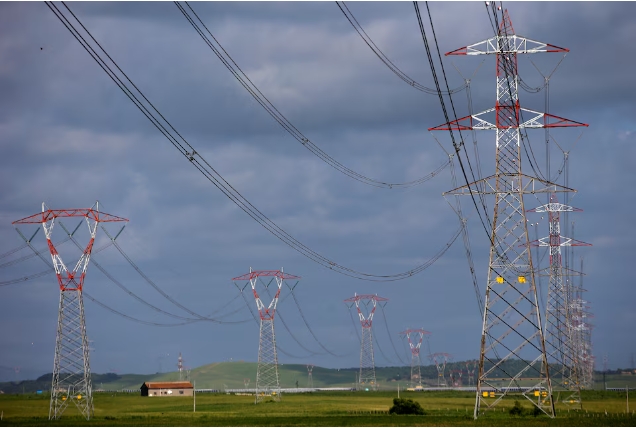
Nigeria’s power grid has collapsed 100 times in the last six years, a development which has resulted in total national blackout. The period covers between 2013 and 2019, marking a six-year period. Also, the nation’s grid collapsed nine times, with the last one on June 30, 2019.
In this interview with FEMI ADEKOYA on the sidelines of the recently concluded Nigeria Oil and Gas conference, he spoke on the challenges in the nation’s power sector and how quick fixes cannot produce the desired results. He also identified non-adherence to signed agreements by regulators, fixing of uncompetitive price and lack of support as bottlenecks to the provision of constant electricity to Nigerians.
How can Nigeria as a country tap from its huge natural gas reserve to develop the power sector?
Nigeria is at the point where we need to decide where we are going as an economy. Our primary income is from oil and gas with a large percentage of that skewed towards oil. But the world is changing, the energy focus is changing and we must also change so that we can survive as a country.
The NNPC GMD said we will use only about 10 percent or thereabouts of our gas domestically. And I think this is what causes a lot of the economic challenges that we are having in the country today. We should really be a gas economy rather than an oil economy. But as you know, it is the other way around. For us to be a gas economy, we must make the entire gas value-chain work. What that means is that gas producer should be able to make the investments required for them to produce; the gas transporter, the owner or the owners of pipelines should have robust infrastructure to move their gas around the country.
The pipelines we have in the country today are grossly inadequate to move our gas around. So, we should ideally have pipelines running to every part of the country. Every state in this country should have a gas pipeline get into it. Beyond that, the actual use of the gas in the country is of optimum importance. What I mean at this point is that we need to have power plants running on gas in most parts of the country. It is a travesty that we are producing 4000 megawatts every year to 180 million people. Meanwhile in Norway, you heard the High Commissioner say they have three million people but they are producing 36,000 megawatts. South Africa has 57 million people and they are producing 42,000 megawatts and we are still talking about 4000 megawatts in Nigeria.
We hit 4500MW, I think a year ago and people were clapping; they should be crying. People should be weeping. As the High Commissioner from Norway was speaking I was ashamed. We should be crying. The power industry must work, the petrochemicals industry must work. We produce or we have the capacity to produce about two million metric tons of fertilizer in this country per year, but we also import petrochemicals. We shouldn’t be importing. We should be producing, using it domestically and also export.
How can we have a gas economy that will protect the value chain?
How is it possible that a DISCO, like Enugu Disco that covers the five South-Eastern states, has only metered less than a million people? How is that possible and we have over 80 million people there? Where is the power going? When the government tells the DISCO how much they can sell power, they can’t make their money back. That means they can’t invest, so DISCOs must be able to sell power at a price and a tariff that allows them to make the investments and then still make a return.
Like I said, nobody is in business for their good health. People go into business to make a return. For us to be able to achieve this, the government must work with the private sector as true partners. They must realize that private companies are the ones that are going to catalyze the industry. They are the ones that are going to make the required investments; they are the ones that are going to attract foreign investments for us to grow our energy industry. Once the value-chain works, only then can we have a true gas economy in this country and we can do it within 15 years; within our lifetime, we can actually see this happen. It is within our lifetime that China went from a relatively poor economy to almost a superpower. It happened in the space of about 20 years. So we can do the same thing and you know when we talk about oil and gas, I tell people don’t put the cart before the horse. We must allow the industry to grow. The investment will come.
But we must do the right thing. We must slacken our regulations to a point that they would allow private companies to start building. In the eight to nine years that we have been talking about power privatization, only one power plant has been built, only one which is the Azura power plant. But the Government has given out licences to over 100 companies, yet only one was able to build a power plant. And even today, it is a struggle to collect the money for the power they produce. We have to change the way we do things in this country. Only then can we start to see true progress. If the oil price falls to $30 a barrel today, we are in trouble.
Despite efforts by previous administrations, the country is still having the same issues before establishment of power plants. What do you think has gone wrong?
I will respond by asking the question back to you. We privatized the telecoms industry some years ago to date and it works very well. Why did it work? I will answer the question. When the government privatized the telecoms industry, they essentially did a proper part of that and then hands off and let the private sector drive the industry. The NCC today does what I call intelligence regulation. The NCC allows private companies when they are issued frequencies to work within their frequencies and then they regulate.
The network providers, when they came to this country, charged a very high tariff but people were still happy to pay the tariff because at least the network was functioning. People underestimate the ability of Nigerians to use the resources available to them. The government today in power is very concerned about people paying more than they think they should pay for power and because of that, they are regulating the industry so much that it stifles any growth or development. When the privatization of the power industry started back in 2010, they had a very nice roadmap laid out. It was clear how all the assets were going to be sold and how all the debts within the industry was going to be handled and it was clear the metrics that successive companies had succeeded in buying these assets will be held to.
All of that has changed. All the private companies that came in from overseas and governments that came in from overseas to invest have so been demoralized because the regulations continue to change every time. You heard the British High Commission saying we must respect contracts. A lot of the contracts that were signed were not respected; a lot of the rules were changed in the middle of the game. When you say to a person; if you buy this asset, you have 30 days or 60 days to pay for it, if you don’t pay we’ll take the asset that way and give it to the next bidder. When we don’t do that, guess what happens? You are sending a message to the investors that we are not going to do what we said we would do. And that’s what happened. Now the people that bought the assets were told that within a number of years, they are expected to make certain investments and if those investments are not met, there were certain sanctions that would be allotted to them. None of that has really been done. So we have not done a true privatization.
Today, as a power company, you would jump through so many regulations to try and get a simple licence and I say to people the licence is just a piece of paper. It doesn’t help you get money to build any assets; what we are trying to do in Nigeria is that we are trying to regulate the market into existence. You can’t do that. Let the market grow first. Then you regulate it. The regulations that the government should worry about today are simply the regulations that will say these are the type of companies that can do this type of business, and the metrics that such companies must meet for them to be able to do this business as well as the areas where such companies are allowed to work.
Beyond that, the government needs to step back and let the companies do what they need to do so that they can actually raise money to do business. We have invested over $50 million in the energy industry at Century Power. We have gone through all the agreements that the government said we needed to go through; we have gone through a lot. We paid lawyers, local and international lawyers, technical technocrats, and technical consultants from different countries to do all the things we were supposed to do. We have done environmental impact assessments approved by the World Bank. Where are the agreements for us to now go and raise the money? They are there but they are not bankable. Bankable means that you cannot secure a loan with those documents. So the industry would never work.
What is your position as regards Gencos selling power directly to some industrial consumers?
We are talking to those manufacturers but that is just the manufacturers. What about the residential clusters? What about those people that cannot buy one megawatt of electricity? What of those people that need one kilowatt here or there? That means they are completely left out of the equation. So we are producing power and selling to those manufacturers that can afford to pay for it but then the regular population, myself and you are unable to get power. That doesn’t fix the problem. We still need to deal with the realities in my opinion and the reality is this, we need to build proper infrastructure. Short fixes, quick fixes have not worked in this country.
They are not going to work long term. And if you look at Nigeria today, we are constantly chasing the quick fixes so it is not going to work. Let us go back to reinvent ourselves and do what is hard and what is hard is building proper infrastructure and those gas pipelines.
The government must be given kudos in starting the gas master plan and funding part of it, but the government cannot do it alone. Companies like Seven Energy started building pipelines on their own; more companies like that need to be allowed to do business but they can only do it when they see that they can make their returns from the power industry and the petrochemicals industry.
How can the industry work?
For the industry to work, we must change the way we do it. The government must relax their regulations. I am not saying they should not regulate. I am saying you must relax it. You must let private companies deal with each other through the willing buyer – willing seller type regime. You cannot regulate gas price. You cannot regulate the price of power that the generating companies produced and you cannot regulate the price that distribution companies sell their power. Let competition regulate the price. People will buy. Today, you probably pay about N30 per kilowatt per hour for the power you get from the National Grid, when you use your generator you are probably paying close to N100. I believe many people will be happy to pay N50 if they get power for 24 hours a day, seven days a week. A lot of Nigerians do not know what they are currently paying, so they think that the government is doing them a favor by regulating these prices. They are not doing them a favor. Even some people in the government do not realize what they are doing. So you must let private sector work with them as partners. That is the only way it’s going to work.