China has the most installed wind and solar capacity in the world and has potential to become “the world’s renewable energy superpower.” However, China’s power sector has also struggled with extensive curtailment of wind and solar generation. Although renewables curtailment has dropped significantly in recent years, it is still an issue in large parts of the country and will continue to be a challenge as wind and solar generation capacity grows. Fortunately, policymakers are developing a host of strategies to deal with the issue. The key will be to make sure these strategies work well together.
Improving power dispatch and retrofitting coal plants to operate more flexibly. Improving power dispatch is a highly effective way to reduce system costs, curtailment, and emissions. Meanwhile, retrofitting coal plants to improve flexibility can also have benefits, but the costs of the retrofits are relatively high. In addition, as the scale of the overall system-wide retrofit effort is increased, the additional benefits taper off. The results are important, given the coal industry’s tendency to argue for retrofits as a major solution to renewable energy curtailment and the resistance to the significant progress that China has been making to improve the efficiency of dispatch.
Where wind, solar concentrations are high, so is curtailment
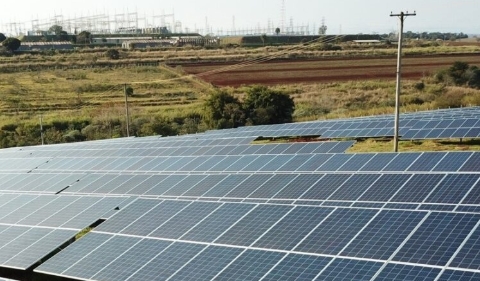
China is well known as being the world leader in installed wind and solar capacity, amounting to 184 GW for wind and 174 GW for solar PV by the end of 2018. Including biomass and hydro, renewable energy accounts for 38 percent of China’s installed power capacity and 26.7 percent of China’s generation.
Although decreasing, curtailment of wind and solar still occurs in parts of China, particularly in areas with high concentrations of wind and solar in Northeast and Northwest China. In 2018, the wind curtailment rate averaged seven percent, down from 17 percent in 2016 and 12 percent in 2017. Meanwhile, solar curtailment dropped to 3 percent in 2018 compared to about 6 percent in 2017. In Xinjiang and Gansu, solar PV curtailment in 2018 amounted to 16 percent and 10 percent, respectively. Over 23 percent of wind was curtailed in Xinjiang in 2018, followed by Gansu (19 percent) and Inner Mongolia (10 percent).
New policies are working, but not sufficient
China has undertaken significant efforts to reduce wind and solar curtailment. Policymakers implemented downward ramping ancillary service markets in Northeast China, whereby thermal generators can bid to be dispatched down, subject to a government-set floor and cap.
China’s 13th Five-Year Plan includes measures for retrofitting 133 GW of coal-fired combined heat and power units in Northwest, Northeast, and Northern China by 2020, increasing the downward regulation capability by 46 GW. The country is also in the process of implementing several power sector reforms, including medium- and long-term power markets, inter-provincial power trading of renewables, and provincial power spot markets.
Technical obstacles
Wind and solar curtailment persists—caused by both technical and institutional barriers. The technical reasons include a preponderance of inflexible coal-fired generating plants in regions with large amounts of wind and solar capacity; inadequate transmission and grid interconnections between wind and solar regions in the Northeast and Northwest to load centres in the East (although China has taken steps in recent years with the addition of several large transmission lines); and little demand response ability to absorb wind and solar power during times of high wind and solar production.
These technical reasons are not unique to China — other countries such as the United States also have regions with high wind and solar resources that lack sufficient transmission to bring wind and solar generation to load centres.
Historical obstacles
However, China does have institutional factors that are unique to the country, namely, the history of equal shares dispatch and rigid adherence to annual generation plans. Under these historical conditions:
All generation units of the same generation type were given a comparable amount of generation hours per year in the annual generation plan.
A fixed-price wholesale tariff incentivised generators to maximise generation, restricting the incentive for generators to ramp down to incorporate more wind and solar generation.
There was limited compensation for generation plants that ramp down, paying only if the generating plant ramps down more than 50 percent of its maximum generation capacity.
Priority dispatch for renewables, but not everywhere
The country is in the process of transforming the power sector, but these historical conditions are still in effect to varying degrees in significant parts of the country. The law in China does require priority dispatch for renewable energy generation, but it has been unevenly implemented. Fortunately, several provinces are now in the process of designing and implementing electricity markets that feature economic dispatch, where renewable energy sources such as wind and solar should be dispatched first because of their low- to zero-marginal costs.
Coal Plant Retrofits v Economic Dispatch
The Climate Policy article used a unit commitment model to compare coal plant retrofit and dispatch reform strategies. The authors modelled the traditional equal shares dispatch approach to committing generators, which employs weekly unit commitment that ignores wind forecasts, and a second, more efficient approach that incorporates wind power forecasts that are updated every four hours. The second approach represents economic dispatch, toward which China’s power system is moving – at least in parts of the country.
The authors created two sets of scenarios to compare the impacts of more flexible coal generation versus improved power dispatch. In both scenarios, the authors used the weekly unit commitment, without incorporating wind power forecasting, as the baseline. The first set of scenarios focus on the impact of coal flexibility by measuring the reduction in wind power curtailment when the minimum load of coal-fired generators is reduced. In other words, only the flexibility from the coal-fired generators is relied upon for reducing curtailment of wind power. The second set of scenarios uses an improved unit commitment that encompasses weekly and daily unit commitment and incorporates wind power forecasts.
The analysis demonstrates the diminishing returns of decreasing the minimum output of coal plants at higher levels of installed wind capacity. The analysis also indicates that improved unit commitment is even more effective at reducing wind power curtailment. Figure 1 illustrates the results for a scenario that represents a “high” level of wind capacity in northwest China. Reducing the minimum output of coal-fired generation by 10 percentage points reduces wind power curtailment from a baseline of about 25 percent to about 17 percent. By contrast, improved dispatch reduces wind power curtailment from 25 percent all the way down to 9 percent.
Summary
In sum, the recent modelling analysis finds that making existing coal plants more flexible and improving power dispatch both help reduce wind power curtailment. But improving power dispatch is more effective as wind power reaches higher capacity levels, while the impact of more flexible coal-fired generation experiences noticeably diminishing marginal returns. Perhaps most importantly, adding incremental coal flexibility may require additional investments that can be quite expensive. Moreover, running a coal plant at lower levels can reduce the plant’s efficiency and increase air emissions from the plant (partially offsetting the air quality benefits of the decreased renewable curtailment). Improved power dispatch does not suffer from either one of those disadvantages.
These results suggest that China should strengthen efforts to adopt marginal cost-based economic dispatch. The “spot market” pilots in eight provinces of China should focus on practical dispatch models that incorporate this principle. Encouragingly, the recent market design announcements coming from several of these provinces do indeed include requirements for economic dispatch. As the new spot markets come into effect, we suggest these provinces create a level playing field so that the system can take advantage of the full capabilities of all resources, including renewable energy generation. Meanwhile, decision makers in China, as in other countries, will need to continue to reconsider the best blend of a broader range of options and strategies to increase grid flexibility for integrating renewables and reducing curtailment.